
History
Fox and Geese is a very old game that dates back to the Middle Ages in Northern Europe, especially Scandinavia and the British Isles. However, some believe it could be even older than that and may be the game referred to in the Norse “Grettis Saga.” From the 1400’s onward it was a popular game amongst British royalty.
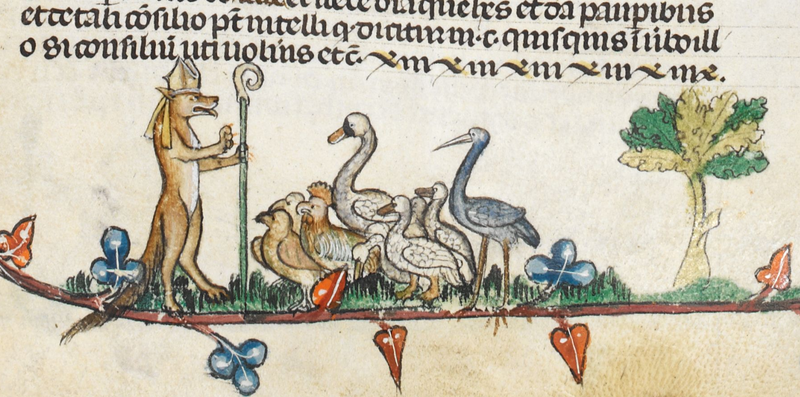
An interesting side note: the fox symbolism did have some cultural significance in Europe during the middle ages. Foxes and geese were depicted in stories such as “Reynard the Fox” as well as artwork of the time. The proverb “When the fox preaches, look to your geese” was born from one of these stories, and warns to be wary of hidden agendas in authority figures.
How to play
Objective
The fox player wins if they have captured all of the geese.
The geese win if they can trap the fox so it is unable to move.
Setup
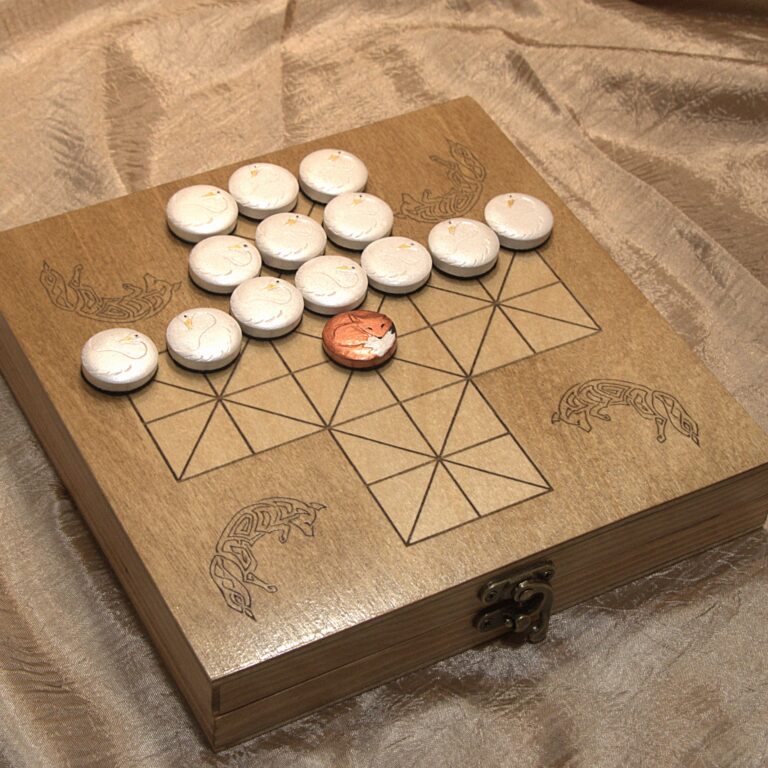
There is 1 fox piece, and 13 geese.
The Fox is placed in the center of the board on the middle intersection.
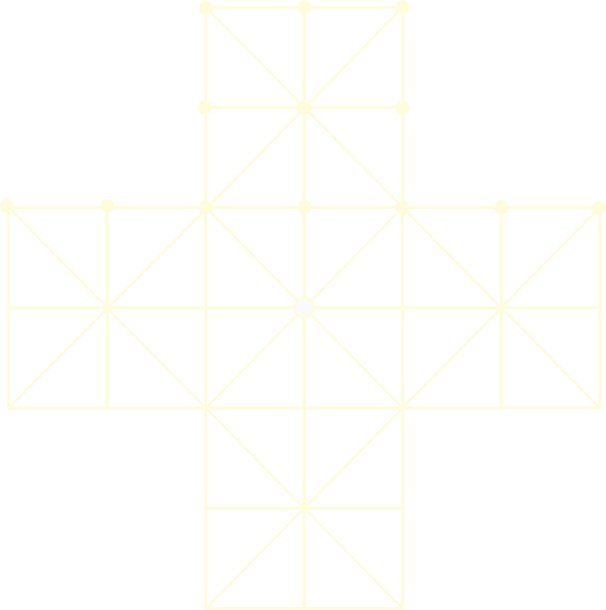
The geese are placed on all of the intersections that are closest to the player who is playing the geese, as shown in the picture.
Decide who will play the fox, and who will play the geese. You can do this any way you like: coin toss, arm wrestle, a battle of wits… it doesn’t really matter. The game is actually more fun if you take turns playing each side.
Game Play
The Fox moves first:
- The fox must move along the lines on the board. You'll notice that on some intersections you will not be able to move diagonally, but on others you can.
- The fox can capture an adjacent goose by jumping over it, if the spot on the other side of the goose is empty.
- The fox is allowed to chain jumps together to capture multiple geese.
- Captured geese are removed from the board. These geese are gone forever and can't be re-claimed by the goose player.
- The fox wins if it captures all the geese, but be careful not to get trapped!
On the Goose’s turn:
- The goose player moves one of their geese forward, diagonally-forward, or sideways along the lines of the board. They can not move backward. You'll notice that on some intersections you will not be able to move diagonally, but on others you can.
- Geese cannot jump over other pieces, but they can move multiple spaces in a straight line if there are no pieces in the way.
- The geese win if they trap the fox so it has no more moves available, but be careful not to get eaten!
A note on the accuracy of historic game rules:
Most ancient games and historic games were originally taught by word of mouth, so there can be many different interpretations to the rules. This is just one version that you can play. There are other variations that you can try until you find your favorite, but this will get you started. Just make sure that when you play with other people who are familiar with the game, you agree on a set of rules before you start to avoid any hard feelings.