History
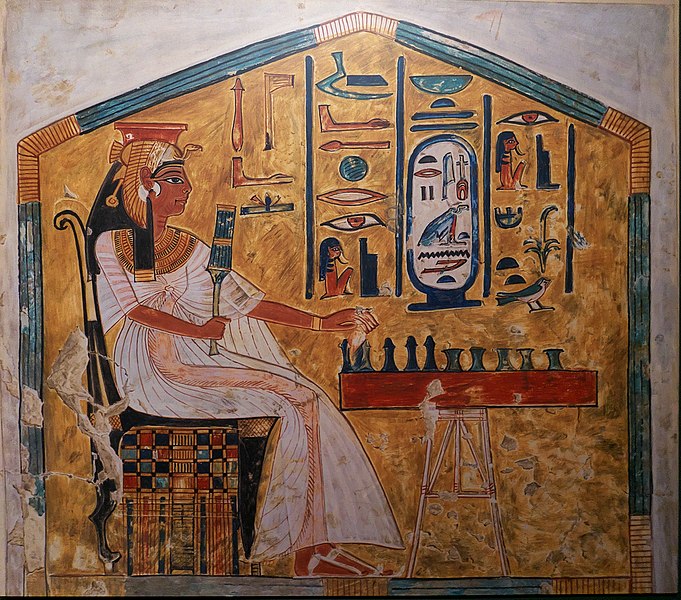
Senet is one of the oldest known board games and was played by the ancient Egyptians over 5000 years ago. Folks of all walks of life enjoyed this game, from the common workers to the pharaohs themselves. Several versions of this game have been discovered that spanned the various dynasties, and it evolved along with the culture.
The theme of the game, much like many other aspects of Egyptian culture, revolves around the cycle of life and death. Senet translates to “passing” and the movement of the pieces along the board represents a souls journey though the afterlife as they attempt to unite with Re-Horakhty, the god of the rising sun.
Unfortunately, the rules of the game have not survived, so historians and game experts have had to speculate on how to play based on the clues. Because of this, there are several variations out there, and the instructions below are just one of many versions you can choose from.
How to play
Objective
The goal is to be the 1st player to get all your pieces through the path and off the board.
Parts & Pieces
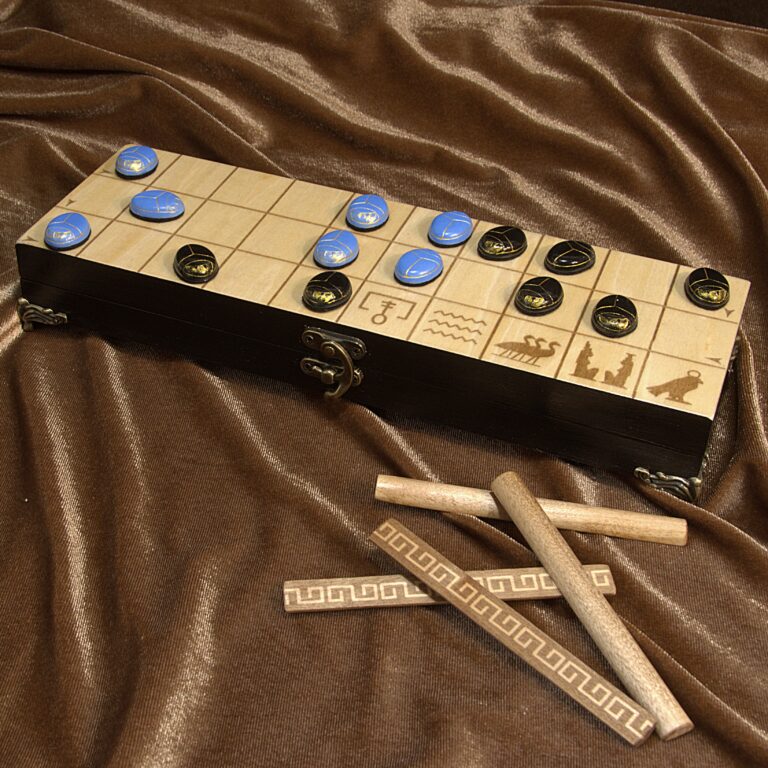
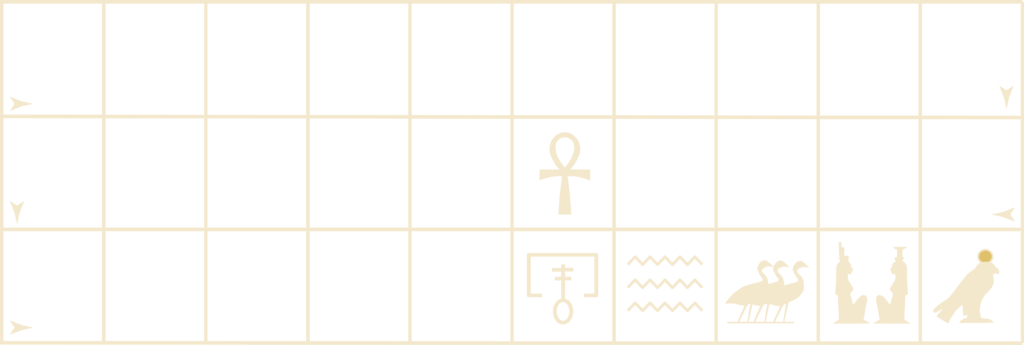
- The board: The game board is made up of 30 squares laid out in 3 rows of 10. The symbols on the board have meanings that we'll talk about later. Boards dating from different eras have different symbols on them, as the game evolved over time, so you may have a board that has different symbols from the ones described here. (These rules align with the games sold in our online shop)
- The game pieces: Each player has 7 pieces.
- The throwing sticks: Since this game was invented before six sided dice, throwing sticks were used to determine how many spaces a player can move. You can use a die if you prefer.
Setup
Each player has 7 pieces, which are placed on the first 14 squares in an alternating pattern starting with the top left square.
Game play will follow the direction of the arrows, starting with the top left, moving from left to right, then the middle row changing direction from right to left, then the bottom row left to right again. (essentially in in a zig-zag pattern)
Game Play
- The player whose piece is on the first square (top left) goes first. (You can decide who gets that honor however you want.)
- On your turn, hold the throwing sticks vertically, and drop them to determine how many squares to move.
- The number of faces up indicate how many squares you can move. If you have 0 faces up you move 5 spaces. Otherwise, you move the number of sticks that landed face up.
- If you get 0 or 4 faces up you get an extra throw.
- You must move a piece forward along the path if you are able to. If none of your pieces can move forward, you have to move a piece backwards. If you can't move any pieces in either direction, your turn is over.
- Only one piece can occupy a space at a time. You can't land on your own space. If you land on an opponent's space you trade places with them, unless they are “safe”.
How to be Safe from Capture
Only one piece can occupy a space at a time. You can’t land on your own space. If you land on an opponent’s space you trade places with them, unless they are “safe”. There are 2 ways to be considered “safe”
- If a player has 2 or more pieces adjacent to each other on the game path, those pieces are safe.
- Any piece occupying a safe square. (see descriptions of special squares below)
Special Squares

The Ankh
* safe square*
The ankh is the symbol of rebirth. This is the start of the journey through life. Your opponent can't switch places with you while you rest here.
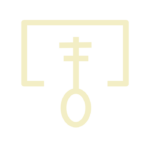
The House of Hapiness
The House of Happiness is the first stage of the afterlife.
You must land on this square by exact count, and you must stop on this square before proceeding past it.
This square is thought to represent the place where mummification rituals are performed.
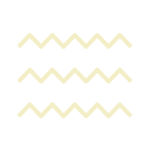
The House of Waters
The House of Waters is the first trial.
If you land here, you are sent back to the ankh.
This square represents the the waters of the underworld that the deceased must gain passage though. In some versions, a piece landing here is removed from the board entirely.
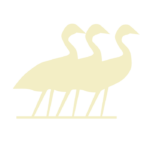
The House of Three Truths
* safe square*
You must roll exactly 3 to leave this square and remove your piece from the board. Many senet artifacts depict 3 birds or 3 feathers to decorate this square. Some Egyptologist believe that it represents the stage in the afterlife where the deceased's heart is weighed against a feather to determine if they are ready to move on.
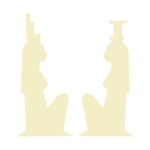
The House of Re-Atoum
* safe square*
You must roll exactly a 2 to leave this square and subsequently remove your piece from the board. Re-Atoum (also known as Atum-Re) is a manifestation of the creator god Atum, and the sun god Re, and often represents the setting sun.
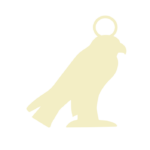
The House of Re-Horakty
* safe square*
You must roll exactly a 1 to leave this square and subsequently remove your piece from the board. Re-Horakty is another manifestation of the sun god Re. In this form he represents the rising of the sun into the dawn.
Declaring the Winner
The winner is the first player to get all of their pieces off the board to reunite them with Re-Horakty.
A note on the accuracy of historic game rules:
Most ancient games and historic games were originally taught by word of mouth, so there can be many different interpretations to the rules. This is just one version that you can play. There are other variations that you can try until you find your favorite, but this will get you started. Just make sure that when you play with other people who are familiar with the game, you agree on a set of rules before you start to avoid any hard feelings.
