
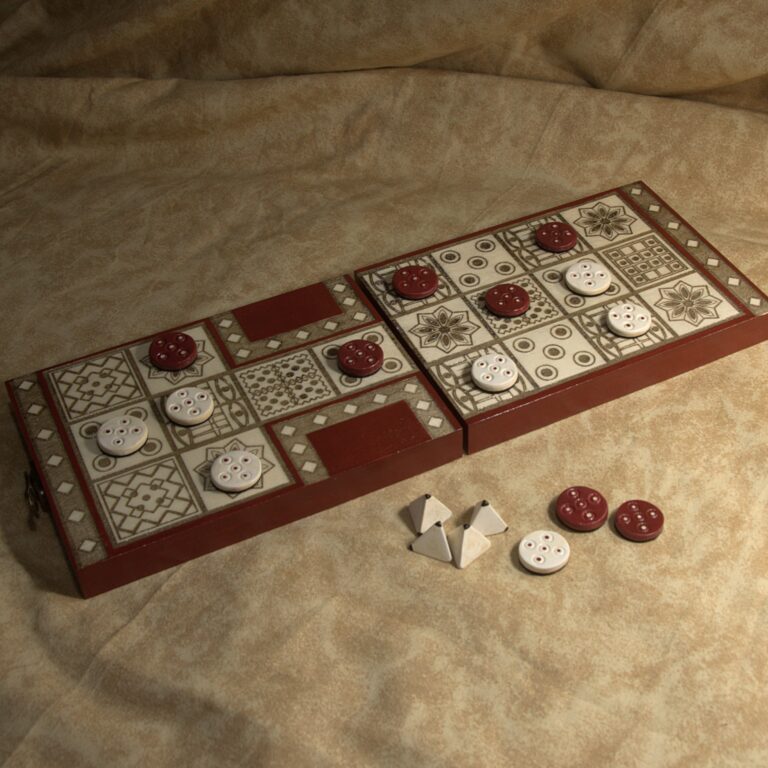
History
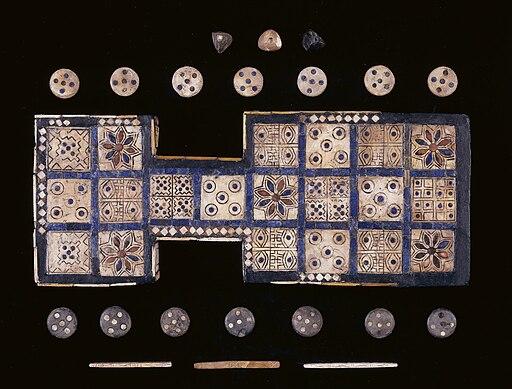
The Royal Game of Ur is a 2-player game from ancient Mesopotamia. Surviving boards have been dated to around 2600-2400 BC, making it one of the oldest known board games. It is also possibly the oldest game that has the rules preserved from ancient times. The instructions were found on two cuneiform tablets written centuries apart. These rules were for different versions of varying complexity.
The game takes its name from a royal cemetery where it was first discovered (in modern day Iraq), but since then game boards have been found across the region from Iran to Egypt to Crete.
How to play
Objective
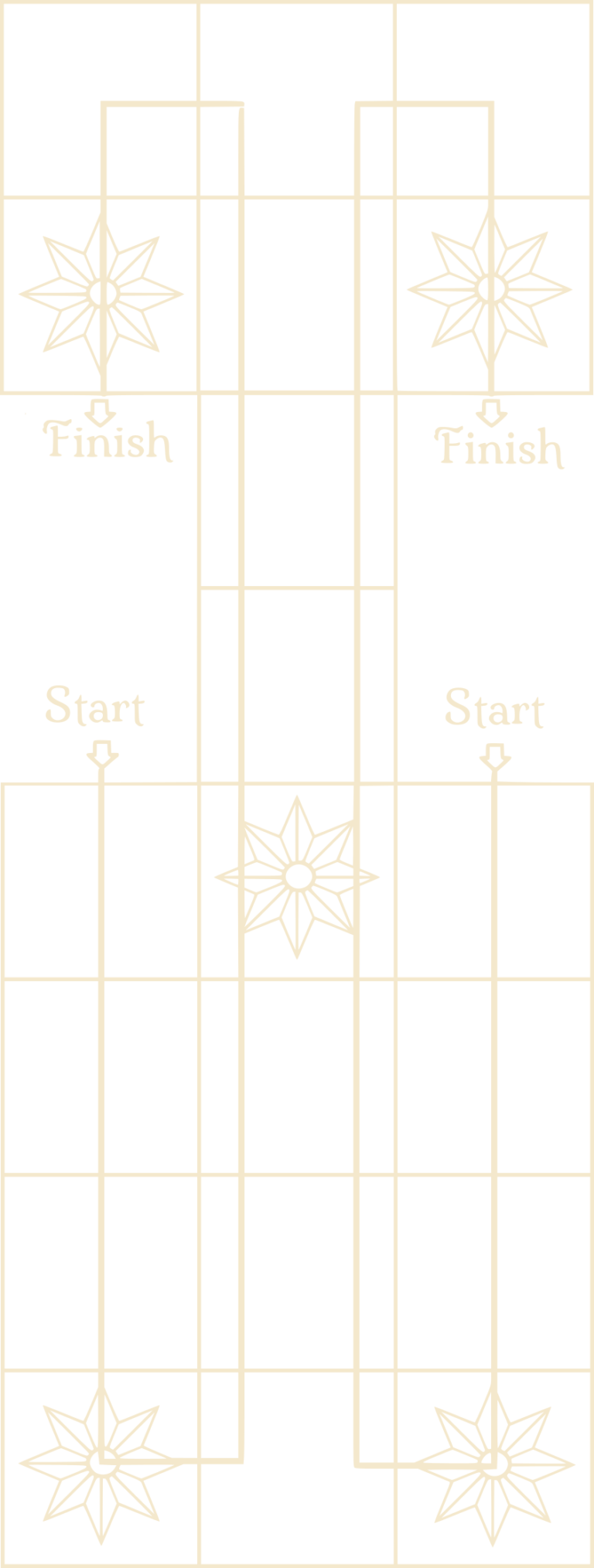
The goal is to move your player through a specific path on the board (see the diagram) without getting captured. The first player to get all their pieces to the end wins. This set of instruction is for basic game play based on the version translated by Irving Finkel, but there are other versions available that you can try.
During your Turn
- Roll the triangular dice. Count the markings on the tips that land pointing up. This is the number of spaces you can move your piece.
- You can either move one piece onto the board and move the number you rolled, or move one piece that is already on the board.
- If you land on a rosette you get an extra roll.
- If you land on your opponent's piece, their piece is removed from the board and has to start over.
- You must get to the end of the board by exact count to remove your piece from the board.
- No 2 pieces can occupy a space, so you cannot land on a space that is already occupied by one of your own pieces.
- You must move a piece if you are able to.
- There is no limit to the number of pieces you can have on the board at one time.
Declaring the Winner
The winner of the game is the first player who successfully gets all of their pieces through the course and off the board.